

What are the performance indicators for a production line solution?
As a seasoned provider of production line solutions, I understand the critical importance of evaluating performance indicators to ensure the efficiency, productivity, and profitability of manufacturing operations. In this blog post, I will delve into the key performance indicators (KPIs) that are essential for assessing the effectiveness of a production line solution.
1. Throughput
Throughput is perhaps the most fundamental performance indicator for a production line. It refers to the number of units or products that a production line can produce within a given period. High throughput indicates that the production line is operating efficiently and can meet the demand for products. To calculate throughput, you simply divide the total number of units produced by the time taken to produce them.
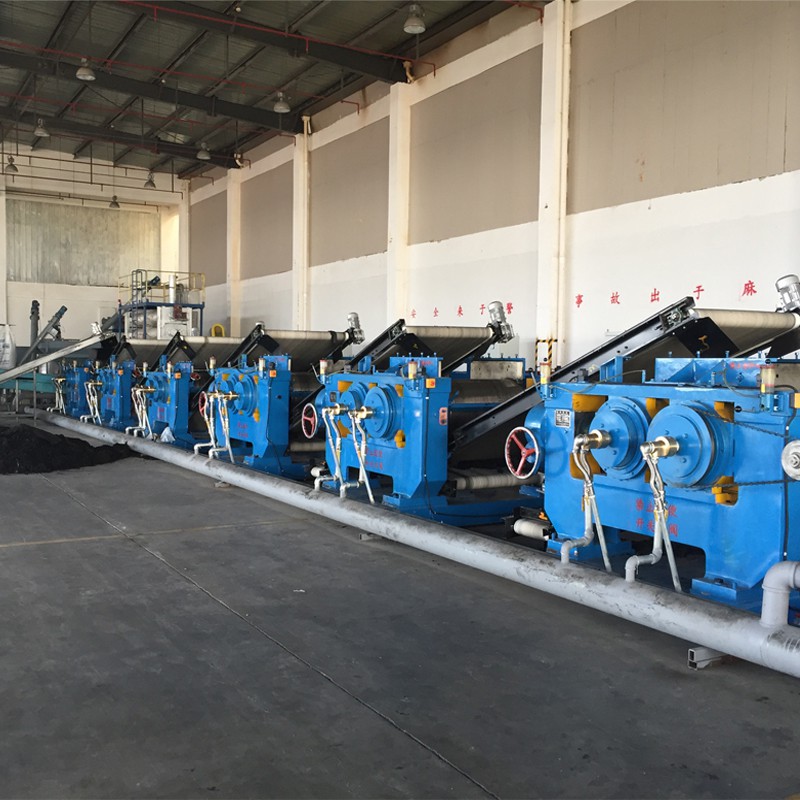
For example, if a Reclaimed Rubber Production Line produces 1000 tons of reclaimed rubber in a month, and the production line operates for 20 days in that month, the daily throughput would be 50 tons per day. Monitoring throughput over time can help identify trends and potential bottlenecks in the production process.

2. Quality Rate
Quality is paramount in manufacturing, and the quality rate is a crucial performance indicator. It measures the percentage of products that meet the specified quality standards. A high quality rate means fewer defective products, which leads to lower production costs, reduced customer complaints, and improved brand reputation.
To calculate the quality rate, you divide the number of non - defective products by the total number of products produced and multiply by 100. For instance, if a Rubber Granulation Production Line produces 1000 rubber granules, and 950 of them meet the quality standards, the quality rate is 95%. Regularly analyzing the quality rate can help identify areas where quality control measures need to be improved.
3. Equipment Utilization
Equipment utilization measures the percentage of time that production equipment is actually in use compared to the total available time. High equipment utilization indicates that the production line's machinery is being used effectively, minimizing idle time and maximizing productivity.
The formula for equipment utilization is: (Operating Time / Available Time) x 100. For example, if a piece of equipment on a Waste Tire Recycling Rubber Powder Production Line is available for 24 hours a day, 7 days a week (168 hours), but only operates for 120 hours in a week, the equipment utilization rate is approximately 71.4%. Low equipment utilization may be due to factors such as maintenance issues, operator inefficiencies, or production scheduling problems.
4. Cycle Time
Cycle time is the time it takes for a single unit to pass through the entire production process, from the start to the end. Reducing cycle time can significantly increase throughput and improve the responsiveness of the production line to customer orders.
To measure cycle time, you record the time when a unit enters the production line and the time when it exits. By analyzing cycle time data, you can identify areas where the production process can be streamlined, such as eliminating unnecessary steps or reducing setup times. For example, if the cycle time for a particular product on a production line can be reduced from 10 minutes to 8 minutes, the production capacity can potentially increase by 25%.
5. Downtime
Downtime refers to the time when the production line is not operating due to various reasons, such as equipment breakdowns, maintenance, or material shortages. Minimizing downtime is crucial for maintaining high productivity and meeting production targets.
There are different types of downtime, including planned downtime (e.g., for scheduled maintenance) and unplanned downtime (e.g., due to sudden equipment failures). Tracking downtime and analyzing its causes can help develop strategies to reduce it. For example, implementing a preventive maintenance program can help reduce unplanned downtime by identifying and fixing potential equipment problems before they cause breakdowns.
6. Overall Equipment Effectiveness (OEE)
Overall Equipment Effectiveness is a comprehensive performance indicator that combines three factors: availability, performance, and quality. It provides a single metric to measure the productivity of a production line.
The formula for OEE is: OEE = Availability x Performance x Quality. Availability is the ratio of operating time to available time, performance is the ratio of actual production speed to the maximum possible production speed, and quality is the quality rate. An OEE score of 100% means that the production line is operating at maximum efficiency with no losses due to downtime, speed, or quality issues. A high OEE score indicates that the production line is well - optimized.
7. Cost per Unit
Cost per unit is an important financial performance indicator that measures the total cost of producing a single unit of product. This includes direct costs such as raw materials, labor, and energy, as well as indirect costs such as overheads.
By analyzing the cost per unit, you can identify opportunities to reduce costs and improve profitability. For example, if the cost per unit of a product on a production line is higher than the industry average, you can look for ways to negotiate better prices for raw materials, improve labor efficiency, or reduce energy consumption.
8. Inventory Turnover
Inventory turnover measures how quickly a company sells its inventory and replaces it with new stock. A high inventory turnover ratio indicates that the production line is producing products in line with market demand, minimizing inventory holding costs and the risk of obsolete inventory.
The formula for inventory turnover is: Cost of Goods Sold / Average Inventory. For a production line solution provider, ensuring an appropriate inventory turnover rate is crucial for maintaining a healthy cash flow and efficient operations.
In conclusion, these performance indicators are essential for evaluating the effectiveness of a production line solution. By regularly monitoring and analyzing these KPIs, manufacturers can identify areas for improvement, optimize their production processes, and ultimately increase their competitiveness in the market.
If you are interested in our production line solutions and would like to discuss how we can help you improve your production performance based on these indicators, we invite you to contact us for a detailed consultation. Our team of experts is ready to provide you with customized solutions tailored to your specific needs.
References
- Manufacturing Performance Metrics Handbook, [Publisher Name], [Year of Publication]
- Lean Manufacturing: Tools and Techniques, [Author Name], [Year of Publication]
- Total Productive Maintenance: Strategies for Improving Equipment Effectiveness, [Author Name], [Year of Publication]


