


Rubber Machinery
Rubber machinery are used to blend and mix rubber compounds with various additives and ingredients. This ensures uniformity and consistency in the rubber mixture. Moreover, extrusion machines shape the mixed rubber compound into continuous profiles or specific shapes. This process is commonly used in the production of rubber hoses, tubing, and gaskets. In addition, molding machinery is employed to give the rubber its final product shape. There are various types of molding machines, including compression molding, injection molding, and transfer molding.
Advantages of Rubber Machinery
Improved Mixing Efficiency
Rubber kneaders are designed to ensure materials are thoroughly and evenly dispersed during the mixing process. Whether mixing natural or synthetic rubber with additives like fillers, plasticizers, or vulcanizing agents, rubber kneaders excel at efficient mixing. The rotor design is critical, utilizing powerful shearing and kneading actions to fully integrate materials, reducing processing time and enhancing the consistency of the mixture.
Increased Productivity
Rubber kneaders are equipped with advanced automation control systems that minimize the need for manual intervention. These systems precisely control the kneading cycle’s time, temperature, and pressure, allowing faster completion of each batch, thus significantly boosting productivity. Automation also reduces errors from manual operations, ensuring consistent and stable production processes.
Energy Savings and Cost Efficiency
Rubber kneaders use energy-saving motors and optimized rotor designs, ensuring efficient mixing while minimizing energy consumption. Precise temperature and pressure control prevent unnecessary energy waste, leading to lower production costs.
Versatility and Broad Applicability
Rubber kneaders are versatile, handling various types of rubber and additives, making them suitable for a wide range of industrial applications. They are essential not only in tire manufacturing and seal production but also in aerospace, construction, medical, and other fields.

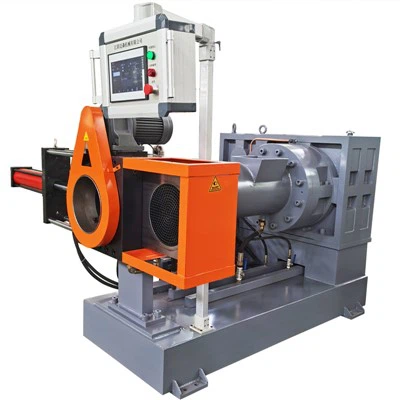
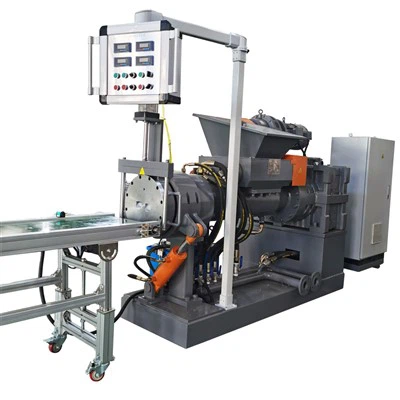

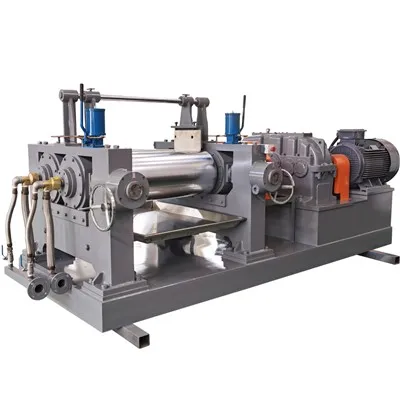


Our Factory
Our company is located in Wuxi, JiangSu Province, 150 kilometers away from Shanghai, Nanjing, north of the Yangtze River, transportation is very convenient. We mainly engaged in the research and development, production and sales of rubber machinery and metal products.
Production Market
Our products have been sold to Southeast Asia, North Asia, Eastern Europe, Australia, America and other markets; Achievements: tire recycling equipment in Malaysia; tire recycling production line in Russia, Ukraine and Turkey; tire recycling rubber asphalt modifier production line in New Zealand , etc
Our Certificate
GB/T19001-2016/ISO9001:2015 QUALITY MANAGEMENT SYSTEM CERTIFICATION.Patent number:ZL 2019 2 1443405.7 ZL 2019 2 1443434.3 ZL 2019 2 1443437.7 ZL 2019 2 1443820.2
After Sale
● Provide guidance information and technical assistance for users to install and debug the products sold free of charge;
● Our company is equipped with a high-quality after-sales service team based on technical personnel, in receiving the feedback of users, in the shortest time to make the satisfactory reply and processing;
● Our product warranty period of one year; After the one-year warranty period, the lifetime maintenance of the products sold is guaranteed;
● Our company regularly visits users to understand the use of products and help solve various problems that may be encountered in the process of use. At the same time to solicit suggestions for quality and technical improvements, in order to better serve users;
Compounding
Compounding machines are designed to measure out the right quantities of raw rubber, process oils, carbon black, bulk fillers, and rubber chemicals to create a rubber compound. They then mix these elements together, creating a rubber compound that is ready for processing.
Extrusion
Extrusion machines force uncured rubber through a die under pressure. This creates a shaped sheet – or ‘profile', as it is known within the industry. A set of rotating knives (or die face cutters) then convert the resulting extruded material into slugs or pellets for further processing.
Calendering
Calendering machines contain horizontal rollers through which rubber material is passed. Often, they are used to combine rubber sheeting with another material or fabric, in a process known as frictioning or combining.
Vulcanisation
Vulcanising rubber can involve a number of different machines and processes depending on the desired result. The type of product will also determine which vulcanisation method is used.
For example, compression moulding machines press uncured rubber between heated moulds. The rubber compound fills the mould cavity before it is cured, producing the finished article.
And for precision mouldings, a manufacturer May utilise the injection moulding method of vulcanisation. In this case, rubber is preheated and forced into a mould cavity by a rotating screw, where it cures.
Latex processing
To create latex, rubber particles are dispersed into an aqueous phase. Typically, it is used in applications where a thin yet tensile material is necessary, such as for gloves and balloons. Latex dipping machines use a porcelain or aluminium mould that is dipped into the latex compound. Once set, the machinery washes, air dries, and vulcanises the product with steam.
Polyurethanes
Polyurethanes are used to create a wide variety of products, including lacquers and coatings, as well as flexible foam. To create PU foam, a machine releases gas into a reacting mixture of isocyanate and polyol. When the reaction is complete, the material is formed around the gas bubbles.
Mixing Machinery
● Banbury Mixers: Banbury mixers are among the most critical machines in the rubber industry. They blend raw rubber with various additives like carbon black, oils, and chemicals to create a homogeneous compound. The mixer consists of two rotors that spin in opposite directions within a chamber, providing intense shearing and mixing actions. This results in a well-dispersed mixture essential for quality rubber products.
● Two-Roll Mills: Use two-roll mills to blend and homogenize rubber compounds. These machines have two rollers. The rollers rotate towards each other. They rotate at different speeds. The rollers pass the rubber compound through them many times. This is to achieve a consistent texture and composition.
Processing Machinery
● Extruders: Rubber extruders shape rubber compounds into continuous profiles. These profiles include tubing, hoses, and seals. The machine forces the rubber through a die of the desired cross-sectional shape. Extruders are crucial for producing long, uniform rubber products efficiently.
● Calenders: Calenders are used to produce sheets of rubber with uniform thickness. This machine consists of multiple rollers through which the rubber compound passes, gradually reducing its thickness. Calendering is essential for making products like rubber sheets, conveyor belts, and floor mats.
● Injection Molding Machines: Use injection molding machines to produce complex rubber components. The process involves injecting hot rubber into a mold. Its cooled and becomes the desired shape. Use this method to produce items such as gaskets, seals, and rubber toys.


Curing Machinery
● Vulcanizers: Vulcanization is a process that enhances the elasticity and strength of rubber by adding sulfur and applying heat. Vulcanizers, also known as curing presses, carry out this process. We place rubber in molds. The machine applies heat and pressure to cure it. This transforms the rubber into a durable product.
● Autoclaves: Autoclaves are big, pressurized ovens. Manufacturers use them for vulcanizing rubber products that cannot fit in standard vulcanizers. They provide uniform heat and pressure, ensuring consistent curing. People often use autoclaves for large or shaped items. These items include hoses and rubber linings.
Cutting and Finishing Machinery
● Cutting Machines: Cutting machines are used to trim rubber products to the desired shape and size. These machines range from simple manual cutters to advanced computer-controlled systems that ensure precision and accuracy.
● Buffing Machines: Buffing machines are used to smooth and finish the surface of rubber products. This process is essential for improving the appearance and performance of the final product, especially in applications where surface quality is critical.
● Grinding Machines: We use grinding machines to make rubber parts the right size and surface finish. Theyre common in tire production. For safety and performance, we need exact tolerances.
Quality Control and Testing Machinery
● Rheometers: Rheometers measure the flow and deformation properties of rubber compounds. This information is vital for understanding the materials behavior during processing and in final applications, ensuring consistent quality.
● Tensile Testing Machines: These machines test the tensile strength and elongation properties of rubber materials. By applying controlled forces, they provide data on the materials durability and elasticity, which is crucial for quality assurance.
● Hardness Testers: Hardness testers determine the hardness of rubber products, an important factor in their performance. These tests ensure that the rubber meets the required specifications for its intended application.
How to Choose a Perfect Rubber Machinery
Thermal solutions
Rubber has low thermal conductivity, but high temperatures can tanker with its quality. Choose a machine with advanced thermal spray technology for quality and efficiency.
In addition, the machine should save power, have high durability and be easy to install. Machines with microwave pre-heating systems are more efficient since they distribute heat uniformly.
Reliability
A reliable processing machine should have low maintenance costs, automated control, and adjustable speed. Delivering rubber without failure requires near to 100% reliability.
Examine the reliability rate of a processing machine by analyzing its subsystems and components, power requirements, and operation. Also, the maintenance rate for a reliable rubber machine is low.
Ease of installation
Installation affects a machine's output. Therefore, pick an easy-to-install rubber processor to avoid failure while operating.
Besides this, choosing a machine that requires minimal human power to install saves time and money. It should require low cost and time, whether installing it for the first time or after repair.
Flexibility
Choose a machine model able to produce rubber sheets with varying thicknesses and sizes. It is easy to shift operations in a flexible processing machine, and in rubber making, the product is easy to modify.
Advanced control
When choosing a rubber processing machine, go for models that can gauge different properties before and after curing. It should also analyze the rubber quality and notify of any need for adjustment.
Note that a machine with advanced control should detect any compounding problem in all processing stages.
Capacity and size of final products
Rubber is used widely in homes, medical, auto, and footwear industries. When choosing a rubber-making machine, consider the size of the final products. For example, rubber sheets for making vehicle tires are thick and large while those used in medical devices are smaller.
According to the technological flow arrangement of the user's workshop, this unit can be installed on the same floor as the machine of the next working procedure. This machine needs fixing on the flat and stable foundation with anchor bolt. Make the foundation according foundation drawing. Prepare the hoisting tool and rigging with the max. hoisting capacity of 10 tons.
Because the environment of the place the unit being installed has big effect on the performance of the unit, there are two requirements to the working environment of the unit: one is the ambient room temperature of the unit should be kept within 0℃ to 40℃; the second requirement is this unit needs to be installed in a place with good ventilation. Additionally, when installing the unit, enough space should be left around the unit for convenient check and maintenance.
Before installing, clean the parts of the unit carefully, remove the rust; assemble the rotor and mixing chamber speed reducer, tilting device and frame, etc. on the base. If can clean clearly when installing, they should not be dismantled and reinstalled. Make the base and motor base level on the foundation, their level tolerance should not exceed 0.05mm/m, then install motor and install the pressing ram device on the frame. Connect the air control pipe and each of the cooling water pipe or heating steam pipe, no joint should leak. The surfaces of rotor, mixing chamber, left/right side panel, upper ram, etc. parts contacting the material are plated with chromium, so during installation and maintenance, be careful not to let hard articles to bump it to avoid damage of chromium layer.
For the gear speed reducer, tilting worm wheel box, if there is no special needs, do not dismantle them. Check whether there is old lubricant remained in each box, if have, discharge it out, then rinse the inside clean, and fill the new lubricant.
Finally check if the connecting bolts are fastened and whether all the connections of the joint are correct. Rotate the rotor of the main motor to check if each part operates normally, only after finding there is no block or bump phenomenon, can perform grouting to the anchor bolt for the second time, after it is cultivated and solidified, then adjust each part.
The principle of the air control system is as Figure 6 shown. Fill proper amount of No. 20 machine oil into the atomized lubricator, and connect to the wind source, press the corresponding button to check whether the action of the dust proof device and upper ram are flexible and reliable, check whether the rotation direction of each motor is correct or not. Only after confirming each part of water (steam) is connected with compressed air pipe and each lubricating point oiling normally, can perform test run.
● Under the condition each of the lubricating point is normal:
● First make the machine operate without load for two hours, and simultaneously operate the upper ram's up/down movement and tilting movement of the mixing chamber to adjust each moving part flexible and reliable, then change into operation with load.The test with load is divided into 3 sections,
● First feed material of 40% of the effective capacity,
● Then feed material of 70% of the effective capacity,
● Finally perform full load test. In the test with load, the gears' operation of the gear speed reducer should be stable without impact and abnormal noise; each moving part is flexible and reliable; after stopping operation, check the engagement of the gears in the speed reducer, if all of them are normal, the machine can be put into production and use.
Shutdown Precautions for Rubber Machinery
Protection of rubber machinery and molds
Before the rubber machinery is shut down, the upper mold plateshould be lowered to ensure that the upper and lower mold plates are in closed status to protect the mold cavity. At the same time, it is necessary to open the mold all the way to position to ensure that the clamping piston is in the main cylinder to prevent rust on the surface of the piston, and to better protect the mold and the clamping mechanism;
Barrel purging
Before shutting down the machine, clean up the rubber compound residue inside the plasticizing barrel and injection barrel. The plasticizing barrel is cleaned if there is no change in the injection position when rotating the screw and inject completely to clean the residue inside the injection barrel to prevent the rubber material from being cured in the injection barrel.
Drainage of CRB, barrel cooler and hydraulic oil cooler
First, turn off the power supply of the cooling water tower, water tower outlet pump, and thermal regulator, and then do the following protection work of drainage:
● Machines with CRB
A. Shut down the machine in advance to ensure that the runner temperature drops below 35 degrees, and then turn off the oil-tempering unit motor and cooling water. It is not allowed to cut off the power supply directly, otherwise, the temperature of the CRB will be too high resulting in the rubber compound being cured in the CRB.
B. After the CRB is cooled down, close the inlet and outlet valves of the hydraulic oil cooler of the machine, and remove the inlet and outlet pipes. If the ambient temperature is lower than zero degrees, a blow gun is needed to blow out all the residual water inside the cooler (at this time, it is necessary to ensure that the solenoid valve for water is powered on) to avoid the water freezing inside the cooler resulting in damages to the cooler, or rusting or oxidation.
C. Finally, turn off the power of the air compressor equipment and release the residual air pressure.
● Machines without CRB
A. Close the cooling water inlet and outlet valves of the injection/plasticizing/nozzle, and remove the inlet and outlet pipes, if the ambient temperature is below zero degrees, a blow gun is needed to blow out all the residual water inside the cooler (at this time, it is necessary to ensure that the solenoid valve for water is powered on), to avoid the water freezing inside the cooler resulting in damages to the cooler, or rusting or oxidation.
B. Finally, turn off the power of the air compressor equipment and release the residual air pressure.
Electrical protection of machines
Please make sure that the main power switch of each rubber machinery equipment is disconnected, and the power switch of the plant's power distribution cabinet that connects to the machine's main power switch is disconnected, and after turning off the power supply, clean up the dust inside the electric cabinet, remove the air filter, clean it from top to bottom with a vacuum cleaner, and do waterproof and moisture-proof measures inside the electrical cabinet.
FAQ