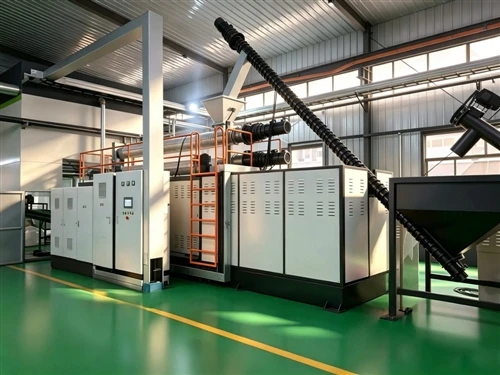
In recent years, the field of rubber recycling has witnessed significant advancements, and the butyl devulcanizer stands at the forefront of this innovation. As a leading supplier of butyl devulcanizers, I have had the privilege of closely observing the research trends and hotspots in this area. This blog post aims to explore the current research hotspots of butyl devulcanizers and how our products can meet the evolving needs of the industry.
1. Environmental - Friendly Devulcanization Processes
One of the most prominent research hotspots is the development of environmentally - friendly devulcanization processes. Traditional devulcanization methods often involve the use of harsh chemicals and high - energy consumption, which can have a negative impact on the environment. Researchers are now focusing on finding greener alternatives.
For instance, using supercritical fluids in butyl devulcanization has gained significant attention. Supercritical carbon dioxide (scCO₂) is a popular choice due to its non - toxic, non - flammable, and easily recyclable nature. In scCO₂ - based devulcanization, the supercritical fluid penetrates the rubber matrix, swelling the rubber and facilitating the breakage of the sulfur cross - links. This process not only reduces the environmental footprint but also has the potential to produce high - quality devulcanized butyl rubber.
Another area of research is the use of bio - based reagents for devulcanization. Enzymes, for example, are being investigated for their ability to selectively break the sulfur bonds in butyl rubber. Enzyme - mediated devulcanization is a mild and specific process that could potentially lead to more sustainable and efficient rubber recycling.
2. Enhancing Devulcanization Efficiency
Improving the efficiency of the devulcanization process is another key research area. This includes reducing the devulcanization time, lowering the energy requirements, and increasing the degree of devulcanization.

Advanced heating technologies are being explored to optimize the energy input during devulcanization. Induction heating, for example, offers a more efficient way to heat the butyl rubber compared to traditional conduction or convection heating methods. Induction heating directly heats the conductive parts of the rubber compound, reducing the overall heating time and energy consumption.
Moreover, the development of new devulcanization agents is crucial for enhancing efficiency. Novel chemical compounds are being designed to break the sulfur cross - links more effectively and at lower temperatures. These agents can significantly reduce the devulcanization time and improve the quality of the devulcanized rubber.
3. Quality Control and Characterization of Devulcanized Butyl Rubber
Ensuring the quality of the devulcanized butyl rubber is essential for its successful reuse in various applications. Research efforts are focused on developing accurate methods for quality control and characterization.
Spectroscopic techniques such as Fourier - transform infrared spectroscopy (FTIR) and nuclear magnetic resonance (NMR) are being used to analyze the chemical structure of the devulcanized rubber. These techniques can provide detailed information about the degree of devulcanization, the presence of residual cross - links, and the chemical composition of the rubber.
Mechanical testing methods, including tensile strength, elongation at break, and hardness testing, are also being refined to accurately assess the physical properties of the devulcanized butyl rubber. By precisely characterizing the quality of the devulcanized rubber, manufacturers can better understand its performance and suitability for different applications.
4. Reuse of Devulcanized Butyl Rubber in High - Performance Applications
Finding new and high - performance applications for devulcanized butyl rubber is an important research direction. While devulcanized butyl rubber has been traditionally used in low - end applications such as rubber mats and gaskets, researchers are now exploring its potential in more demanding areas.
In the automotive industry, devulcanized butyl rubber can be used in the production of tire inner liners. By carefully controlling the devulcanization process and blending the devulcanized rubber with virgin rubber, it is possible to produce inner liners with excellent air - impermeability and mechanical properties.
In the construction industry, devulcanized butyl rubber can be incorporated into sealants and adhesives. The unique properties of butyl rubber, such as its low gas permeability and high flexibility, make it an ideal candidate for these applications.
Our Offerings as a Butyl Devulcanizer Supplier
As a supplier of butyl devulcanizers, we are committed to staying at the forefront of these research hotspots. Our butyl devulcanizers are designed with the latest technologies to ensure high efficiency, environmental friendliness, and excellent quality control.
We also offer a range of complementary rubber recycling equipment, including EPDM Devulcanizer and High Speed Mixing Equipment, which can be integrated with our butyl devulcanizers to create a comprehensive rubber recycling solution.
Our team of experts is dedicated to providing technical support and customized solutions to meet the specific needs of our customers. Whether you are looking to improve the efficiency of your rubber recycling process, enhance the quality of your recycled rubber, or find new applications for devulcanized butyl rubber, we are here to help.
Contact Us for Purchase and Negotiation
If you are interested in our butyl devulcanizers or other rubber recycling equipment, we encourage you to reach out to us for further discussion. We are ready to have in - depth conversations about your requirements, provide detailed product information, and negotiate the best possible terms for your purchase. Our goal is to establish long - term partnerships with our customers and contribute to the sustainable development of the rubber recycling industry.
References
- "Green Devulcanization of Rubber: A Review" - Journal of Cleaner Production
- "Advances in Rubber Recycling Technologies" - Rubber Chemistry and Technology
- "Characterization of Devulcanized Rubber for High - Performance Applications" - Journal of Applied Polymer Science