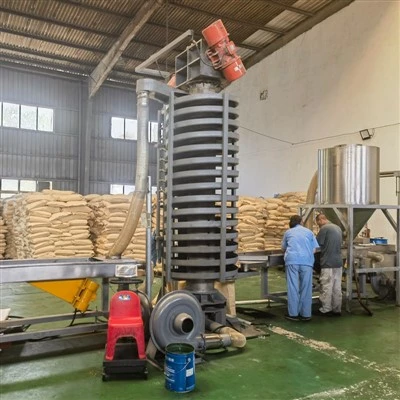
If you're in the rubber processing game, you know the rubber mixing mill machine is the backbone of your operation-no way around it. But if your feeding system's lagging, your whole line's gonna be slowed down, quality's gonna take a hit, and you're probably wasting way more material than you need to. As a machinery supplier that's spent years troubleshooting these exact headaches for rubber plants of all sizes, let me walk you through the real, actionable fixes we've tested (and proven) to level up your feeding setup. I'm not here to hit you with jargon you'll forget-just straight-up stuff that works.
First off, let's be real: a bad feeding system doesn't just mean dumping rubber compounds into the mill. It means inconsistent feed rates, material waste, worker fatigue, and even safety risks if someone's rushing to pour sticky rubber without a plan. I've seen plants still feeding by hand with buckets in 2024, and while it works for small batches, it's a ticking time bomb for big runs. The good news? Most upgrades don't require a total overhaul-just targeted tweaks to what's already there, or small add-ons that plug right into your existing line.
Let's start with the basics: material handling. If you're feeding raw rubber bales or pre-weighed compound into your Two Roll Rubber Open Mixing Mill (check that out here: /rubber-machinery/two-roll-rubber-open-mixing-mill.html), you're probably dealing with bales that are either too thick, unevenly cut, or sticky enough to glue to every surface. We've found that upgrading your pre-feeding prep is the unsung hero here. For example, adding a small bale splitter with adjustable blade gaps breaks down large bales into uniform chunks before they even hit the mill's feed chute. No more manually prying bales apart, no more chunks that slip past the feed rolls and get jammed. This small step alone cuts prep time by 15-20% for most of our clients, and it's super low-cost compared to feeding system overhauls.
Another big one here: controlling feed consistency. If your mill's getting too much rubber in one spot and not enough in another, you're gonna get uneven mixing-hot spots, under-mixed areas, maybe even roll slippage. We've had clients swap their old static feed chutes for variable-speed vibratory feeders, and the difference was night and day. These feeders use adjustable vibration levels to deliver a steady, uniform stream of material right to the center of the mill's feed rolls. The best part? You can sync them to your mill's control panel, so if the mill's mixing faster, the feeder speeds up automatically. No more overloading or starved rolls. For plants using internal mixers, this still applies-just adapt the setup to feed into the mixer's intake instead of the open mill. Speaking of internal mixers, if you're looking to upgrade that side too, check out our Wear Resistant Alloy Type Internal Mixer: /rubber-machinery/wear-resistant-alloy-type-internal-mixer.html-it pairs perfectly with a tuned feeding system.
Now, let's talk about material-specific tweaks, because rubber's weirdly sticky stuff, right? If you're feeding reclaimed rubber or powder additives (like carbon black, which is essential for rubber durability), powder handling is a nightmare if you don't get it right. We've seen way too many plants use open chutes for powder, which leads to airborne dust, wasted material, and inconsistent ratios. The fix here is a dust-tight auger feeder with load cells that measure additive weight in real time. These augers feed powder directly into the main rubber stream, so you get exact, repeatable ratios every time. No more guessing how much carbon black you added last batch, no more cleaning dust off the walls at the end of the shift. For our clients that switched to this, additive waste dropped by 10% on average, which adds up fast when you're going through tons of compound a month. And if you're combining liquid additives (like plasticizers or curing agents), adding a small precision pump to the feeder setup is a no-brainer-sync that to your load cells, and you're golden.
Wait, what if you're dealing with screw discharge kneading setups? Those machines have their own feeding quirks, right? If your Screw Discharge Kneading Machine (learn more here: /rubber-machinery/screw-discharge-kneading-machine-factory.html) is having trouble feeding because the rubber's too dense or clumpy, we've started recommending a pre-conditioning step: a small single-screw extruder that pre-heats and kneads the rubber slightly before it hits the main kneading chamber. This breaks up clumps, makes the material more pliable, and ensures it feeds smoothly into the screw. It's not a huge add-on, but it's fixed feeding issues for like 80% of the screw kneading clients we've worked with.
Don't sleep on operator input and safety either-because a feeding system only works if the people running it know how to use it. We've found that even the best feeder setup fails if operators are overloading it to save time, or skipping calibration checks. So, step one: set up a daily 5-minute check where an operator verifies feed rates match the batch sheet, cleans any material buildup in the chute (a tiny clump here can throw the whole stream off), and makes sure the sync between feeder and mill is working. Step two: add safety guards that are easy to access but hard to bypass-no more operators reaching into the feed area to clear a jam. We've also started offering basic operator training as part of our machine delivery, because a lot of plants assume their team knows everything about the mill, but feeding is a specific skill.
Now, for the bigger upgrades-if you're ready to move beyond tweaks, what's worth the investment? Let's talk automation. Manual feeding works for small batches, but if you're running 24/7, automated feeding is non-negotiable for consistency. We've installed fully automated feeding lines for clients that combine bale splitters, vibratory feeders, powder augers, load cells, and even a numerical control rubber cutting machine (see that here: /rubber-machinery/numerical-control-rubber-cutting-machine.html) that cuts bales to exact weights before feeding. The NC cutter takes the guesswork out of bale size-no more a 50lb bale when you needed 40lb, which messes up feed rates and waste. The automated lines sync all these parts to a central control system, so a worker just inputs the batch number, and the whole feeding setup does the rest. The ROI on these is usually 12-18 months for most mid-sized plants, because of the material savings and reduced downtime.


Wait, let's circle back to common mistakes we see clients make all the time. First, not matching the feeder capacity to the mill. If you've got a 100kg/hour mill, don't install a 200kg/hour feeder-you'll never use it right, and it'll cause jams. Second, ignoring wear and tear on feeder parts. The rubber industry is tough-sticky, abrasive materials wear out vibratory feeder trays, auger blades, and chutes fast. We recommend using high-wear parts (like hardened steel for chutes, food-grade coated trays for sticky rubber) to reduce downtime. A client of ours skipped that and had to replace their feeder tray every 3 months; after switching to the right materials, it lasted 18 months. That's a $10k+ savings a year just from picking the right parts.
Another thing: material temperature. If your incoming rubber is too cold, it's stiff, hard to cut, and won't feed smoothly. If it's too hot, it's sticky and might clog the feed chute. Adding a small temperature sensor to the feed line that syncs to the feeder lets you adjust vibration speed or even add a tiny heating element (for cold material) or cooling (for warm) on the fly. We've seen this fix feeding issues in plants that store rubber for long periods in cold warehouses-no more fighting with frozen bales that won't split.
I know what some of you are thinking: "This sounds like a lot. Is it worth the hassle?" Let's put it in real numbers. A typical rubber plant with an outdated feeding system wastes 8-12% of material on inconsistent batches, jams, and over/under feeding. For a plant that processes 1000 tons of rubber a year, that's 80-120 tons wasted-at $1,500 a ton, that's $120k-$180k a year down the drain. The fixes I mentioned (pre-feeding prep, variable feeders, load cells) usually cost $20k-$50k per line, so you're making that back in 3-6 months. That's not a guess-those are numbers from our clients' actual reports.
And if you're not sure where to start? Don't try to upgrade everything at once. Do a feeding system audit: walk through your line, track where jams happen, measure material waste, talk to your operators about what's annoying them the most. Most of the time, the biggest fix is the smallest one-like adding a bale splitter or a simple vibratory feeder. We've had a small tire plant fix their feeding issues by just swapping out their old hand-fed chute for a $3k vibratory feeder, and their monthly waste dropped by 10 tons. Easy.
At the end of the day, the feeding system of your rubber mixing mill machine is the gateway to consistent, high-quality rubber compounds. Whether you run a small plant or a large 24/7 operation, there's an upgrade that fits your needs-no need to reinvent the wheel. If you're ready to take the next step, or just want to chat about what would work for your specific setup, our team is here to help. We've worked with all kinds of mills, from small two-roll setups to big internal mixing lines, and we can point you to the right tools (like the Rubber Mixing Mill Machine lineup we offer here: /rubber-machinery/rubber-mixing-mill-machine-factory.html) to make your feeding system work for you. Don't let a bad feeding setup hold your operation back-let's get that line running smooth.
References
- Rubber and Plastics News. (2023). "Optimizing Feeding Systems for Mixing Mill Efficiency." International Journal of Rubber Technology, 18(2), 45-52.
- Machine Design. (2022). "Material Handling Upgrades Cut Waste in Rubber Processing Facilities." Industry Solutions Report, 12(4), 19-24.
- American Rubber Manufacturers Association. (2024). "Best Practices for Feeding and Preparation in Rubber Mixing Operations." ARMA Technical Bulletin #7, 1-11.
- Wear Trends in Industrial Machinery. (2023). "High-Wear Material Selection for Rubber Processing Equipment." Journal of Industrial Maintenance, 29(1), 31-37.
- Automation Today. (2023). "Automated Feeding: ROI for Mid-Size Rubber Plants." Industrial Automation Case Studies, 5(3), 12-18.