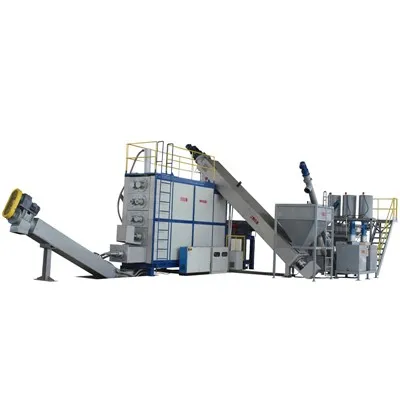
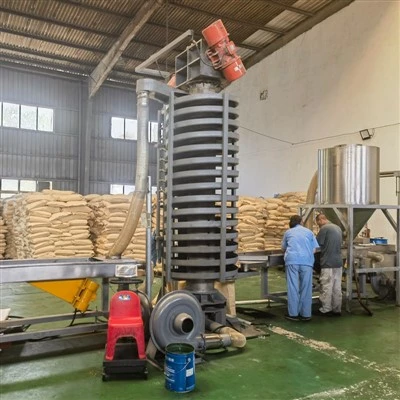
If you've ever invested in heavy industrial equipment like a devulcanizer, you know that buying the machine is only half the battle-keeping it running efficiently long-term is what makes or breaks your rubber recycling operation. As a devulcanizer supplier, I've spent thousands of hours on the phone with customers who thought their job was done once the equipment arrived on their loading dock. Too many learned the hard way that neglecting after-sales support leads to unplanned downtime, wasted raw rubber, and thousands in lost revenue. Today, I want to pull back the curtain on the after-sales services we provide for our devulcanizers, and explain why these support offerings are just as critical as the equipment itself.
Let's start with the basics: what a devulcanizer does. This piece of machinery breaks down vulcanized rubber (like old tires, hoses, or industrial rubber parts) into reclaimed rubber that can be reused in new products-everything from new tires to rubber mats to shoe soles. A well-maintained devulcanizer can last 10+ years and deliver consistent, high-quality reclaimed rubber. But even the best equipment will run into hiccups, especially if operators don't have the training to use it correctly, or if wear and tear isn't addressed early. That's where after-sales services come in, and these services look different depending on who you're working with.
First on our list of non-negotiable after-sales support is on-site installation and commissioning. When customers receive a devulcanizer, it's not like plugging in a kitchen appliance. These machines are large, heavy, and require precise alignment of heating elements, pressure sensors, and rubber processing chambers. Trying to install them with a general industrial crew is a recipe for misalignment, which leads to uneven devulcanization, higher energy use, and faster wear on parts. For our customers, we send a team of certified technicians to their facility-we don't just leave them with a instruction manual. These technicians oversee every step: unloading the machine, leveling it to within a fraction of an inch, connecting electrical and steam lines correctly (many devulcanizers run on steam for optimal temperature control), and testing it with actual rubber scrap to make sure it's producing the right quality reclaimed rubber before our team leaves. We also offer this same level of support for complementary equipment, like our two-shaft tire crushing machine or single shaft tire crushing machine, because rubber recycling is a full workflow-not just standalone machines. If the crushing equipment is misaligned, it can send unevenly sized rubber chunks to the devulcanizer, which clogs the chamber and damages internal parts. That's why our installation team makes sure every piece of your processing line works in sync.
Next, operator training. I can't tell you how many times I've heard a customer say, "We trained our guys in an hour and now we're having issues." Devulcanization is a technical process that depends on specific variables: temperature, pressure, residence time in the chamber, and the size and quality of the input rubber. If an operator sets the temperature 10 degrees too high, you end up with burnt rubber that's unusable. If they leave the rubber in the chamber 5 minutes too long, you waste raw material and energy. Our training programs are two-fold: first, a hands-on on-site session where operators work directly with our technicians on the actual devulcanizer, running test batches, adjusting settings, and practicing troubleshooting common issues. We also offer virtual refreshers for new operators, and we provide a detailed digital manual that walks through every setting, maintenance step, and safety protocol. For customers who specialize in butyl rubber (like tire inner tubes or sealants), we even have specialized training for our butyl devulcanizer, since butyl has different devulcanization requirements than general rubber scrap. This training doesn't just prevent downtime-it helps customers get the highest possible yield from their rubber scrap, which directly impacts their bottom line.
Preventive maintenance is another cornerstone of our after-sales services. The old adage "an ounce of prevention is worth a pound of cure" is especially true for devulcanizers. Worn parts like seals, heating coils, and pressure sensors don't just stop working suddenly-they degrade over time, and catching small issues early can save tens of thousands in repairs. We offer two levels of preventive maintenance: scheduled on-site visits, where our technicians inspect every critical part, tighten connections, calibrate sensors, and replace parts that show signs of wear; and a 24/7 remote monitoring service for customers who want real-time visibility into their devulcanizer's performance. Our remote monitoring system tracks temperature, pressure, energy use, and processing rate, and sends alerts if something is off-like a heating coil starting to fail, or pressure dropping below the required level. For example, a customer in Ohio once used our remote monitoring and got an alert that their pressure sensor was drifting. Our technician guided their operator through a quick calibration over the phone, and avoided a catastrophic failure that would have shut down production for 3 days and cost an estimated $15,000 in lost revenue. Remote monitoring also helps with parts planning: if we see that a certain seal is going to wear in 3 months, we can ship it to the customer ahead of time, so they don't have to wait for a part to arrive and production stops. We also offer maintenance kits that have all the common replacement parts-from gaskets to filters-so customers always have what they need on hand, no more scrambling to order parts at 2 a.m. when a machine breaks.
When something does go wrong, fast on-site or remote technical support is non-negotiable. We know that in the rubber recycling business, every hour of downtime is lost revenue. A small problem that takes 2 days to fix could cost a small business tens of thousands, especially if they have contracts with manufacturers that require a steady supply of reclaimed rubber. That's why our support team is available 24 hours a day, 7 days a week-no waiting for business hours, no running through a phone tree. For minor issues, like a clogged rubber feed chute or a misaligned sensor, our technicians can walk customers through step-by-step remote troubleshooting over the phone or video call, and have the machine back up in 15 minutes or less. For more complex issues, like a major part failure, we have a network of local certified technicians across North America (and international partners for global customers) who can be on-site within 48 hours, sometimes even faster for emergency cases. We also keep a large inventory of spare parts in our warehouses, so we can ship critical parts overnight to customers who need them. Last year, a customer in Texas had a broken devulcanizer rotor during a peak order season. We shipped a replacement rotor the same day, and our local technician was on-site the next morning, having the machine back running by the end of the day. Without that fast support, they would have missed a $200,000 order.

Another underrated part of after-sales support is process optimization and upgrade services. Our devulcanizers are designed to be flexible, meaning customers can adjust them to process different types of rubber scrap, or increase their production rate as their business grows. But many customers don't know about all the capabilities of their machine, or how to tweak their process to get better yield or lower energy use. Our technical support team works with customers regularly to review their production data, suggest adjustments-like changing the residence time in the chamber, or adjusting the temperature profile for different rubber types-and recommend upgrades when they're ready to expand. For example, we once helped a customer who was using our standard devulcanizer to process passenger tire rubber, but wanted to start processing heavy-duty truck tires to meet a new contract. Our team helped them adjust the machine's pressure settings and recommended a upgrade to the rotor design, which allowed them to process the tougher truck tire rubber without any damage, doubling their production capacity for that type of scrap. We also work with customers to integrate complementary equipment into their line, like our high-speed mixing equipment that works with devulcanized rubber to create finished products faster. These upgrades don't just extend the life of the devulcanizer-they help customers grow their business without having to buy an entirely new line of equipment.
Warranty support is the foundation of all these services, and we stand behind our devulcanizers with a comprehensive warranty that goes beyond the standard 12-month coverage. Our warranty covers all manufacturing defects in parts and workmanship, and if a part fails during the warranty period, we ship a replacement for free, no questions asked. We also offer extended warranty plans for customers who want even more peace of mind, covering annual preventive maintenance and all parts for up to 5 years. Unlike some suppliers who offer a limited warranty that only covers the machine itself, our warranty includes labor for on-site repairs during the warranty period, so customers don't have to pay for expensive technician fees if something goes wrong.
I want to be honest here: not all devulcanizer suppliers offer this level of after-sales support. Some will sell you the machine, send a one-page instruction manual, and disappear until something breaks. For small rubber recycling businesses, this can be a death sentence-one breakdown can put them out of business. For larger operations, it means huge unexpected costs and missed contracts. That's why we've built our entire business around making sure our customers' devulcanizers run smoothly, so they can focus on what they do best: recycling rubber and making high-quality reclaimed products.
If you're in the market for a devulcanizer, or you're looking to upgrade your current rubber recycling line, the quality of the after-sales services is just as important as the machine's price. A cheaper machine with bad support will end up costing you more in repairs and downtime than a slightly more expensive machine with comprehensive support. We've worked with hundreds of customers, from small family-owned shops to large industrial recycling plants, and our after-sales services have helped them increase their production, reduce their costs, and grow their business for years.
Ready to learn more about how our devulcanizers and after-sales support can work for your operation? We'd love to talk to you about your specific needs, whether you're processing tires, butyl rubber, or other industrial rubber scrap. Don't settle for a supplier that only cares about making the sale-partner with a team that's invested in your long-term success. Reach out to us today to discuss your requirements and find the right solution for your rubber recycling business.
References
- Rubber Recycling Technology: Principles and Practice, 2021, International Rubber Study Group
- Devulcanization of Waste Rubber: Recent Advances and Applications, 2019, Journal of Applied Polymer Science
- Industrial Equipment Maintenance Best Practices for Heavy Manufacturing, 2022, National Association of Manufacturers
- Tire Recycling Market Growth and Equipment Trends, 2023, Global Market Insights Inc.