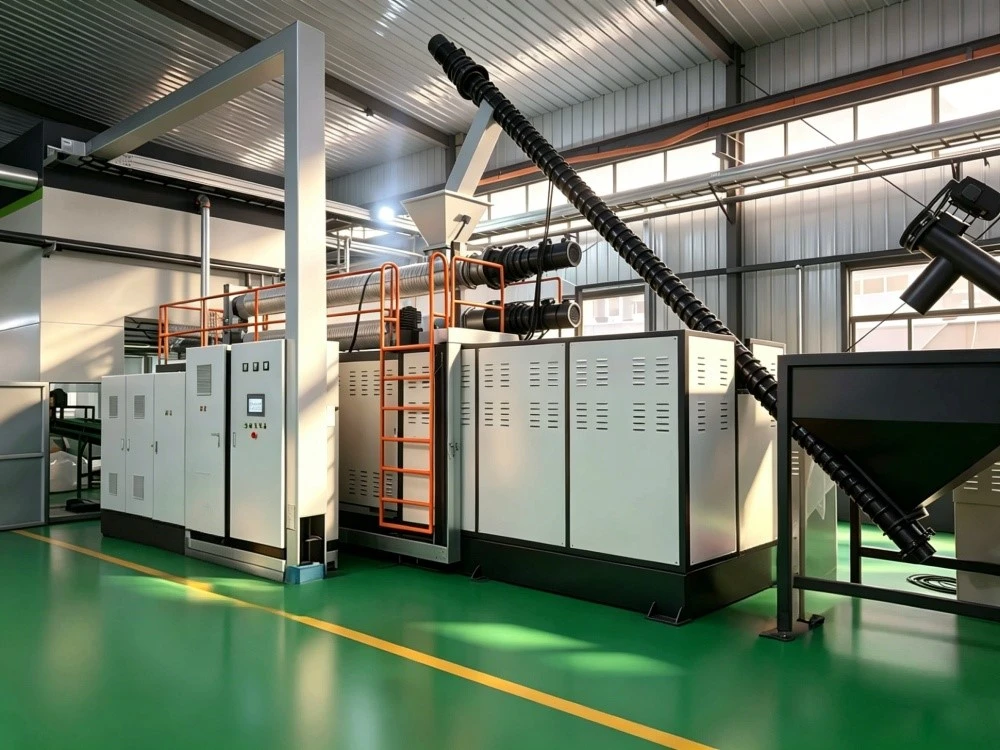
In the realm of rubber recycling, the quest for efficient and effective methods to enhance the quality and processability of recycled rubber has been a long - standing pursuit. Butyl rubber, known for its excellent air impermeability, damping properties, and resistance to heat and chemicals, is widely used in various industries such as tire manufacturing, automotive sealing, and pharmaceutical stoppers. Recycling butyl rubber not only helps in reducing waste but also has significant economic and environmental benefits. One potential solution to improve the processability of recycled butyl rubber is the use of a Butyl Devulcanizer.
What is a Butyl Devulcanizer?
A Butyl Devulcanizer is a specialized piece of equipment designed to break the cross - links in the vulcanized butyl rubber. By using a combination of mechanical, thermal, and chemical processes, the devulcanizer can selectively break the sulfur - sulfur and sulfur - carbon bonds in the rubber matrix, while keeping the main polymer chains intact. This process is known as devulcanization.
The devulcanization process using a Butyl Devulcanizer offers several advantages. Firstly, it can significantly improve the processability of the recycled butyl rubber. After devulcanization, the rubber becomes more fluid and can be easily mixed with other polymers or additives. This allows for the production of high - quality rubber products with consistent properties. Secondly, devulcanization can also restore some of the original physical and mechanical properties of the butyl rubber, such as elasticity and tensile strength.
Improving Processability with Butyl Devulcanizer
One of the main benefits of using a Butyl Devulcanizer is the improvement in the processability of recycled butyl rubber. Processability refers to the ease with which the rubber can be shaped, molded, and processed into final products. Before devulcanization, recycled butyl rubber is often stiff and difficult to work with. It may require high energy input during processing, and the resulting products may have poor surface finish and mechanical properties.
After devulcanization, the recycled butyl rubber becomes more flexible and easier to process. It can be easily mixed with virgin rubber or other additives to improve its properties. For example, the devulcanized butyl rubber can be blended with other elastomers to create a more versatile material with enhanced performance characteristics. This blend can then be used in a variety of applications, such as tire treads, seals, and gaskets.
Case Studies and Real - World Applications
There have been several case studies that demonstrate the effectiveness of using a Butyl Devulcanizer to improve the processability of recycled butyl rubber. In one study, a tire manufacturing company used a Butyl Devulcanizer to recycle waste butyl rubber from old tires. After devulcanization, the recycled butyl rubber was blended with virgin rubber and used to produce new tire inner tubes. The resulting inner tubes had excellent air impermeability and mechanical properties, comparable to those made from virgin rubber.
In another case, a rubber sealing manufacturer used a Butyl Devulcanizer to recycle butyl rubber waste from their production process. The devulcanized rubber was then used to produce new seals with improved flexibility and durability. These seals were able to withstand high pressures and temperatures, making them suitable for a wide range of applications in the automotive and industrial sectors.
Conclusion
In conclusion, the Butyl Devulcanizer has the potential to significantly improve the processability of recycled butyl rubber. By breaking the cross - links in the vulcanized rubber, it can make the recycled material more flexible, easier to process, and suitable for a wide range of applications. The integration of the Butyl Devulcanizer with other recycling equipment can further enhance the efficiency of the rubber recycling process.