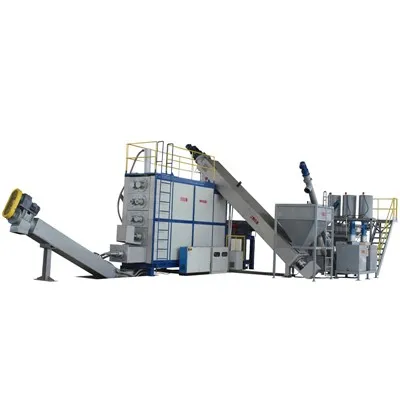
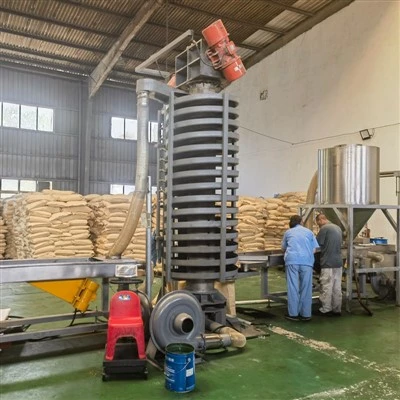
Hey there! I'm a supplier of Asphalt Modifier Production Line, and today I want to dig into a question that often pops up: Can an asphalt modifier production line produce modifiers with different viscosities?
First off, let's talk a bit about what asphalt modifiers are and why viscosity matters. Asphalt modifiers are substances added to asphalt to enhance its performance. They can improve things like durability, resistance to temperature changes, and flexibility. Viscosity, on the other hand, is a measure of a fluid's resistance to flow. In the case of asphalt modifiers, different viscosities can be required depending on the specific application. For example, in colder climates, a modifier with lower viscosity might be needed to ensure the asphalt remains workable and can be properly applied. In hotter regions, a higher - viscosity modifier could help prevent the asphalt from becoming too soft and rutting under traffic.
So, back to the main question. The short answer is yes, an asphalt modifier production line can produce modifiers with different viscosities. But how does it work?
Adjusting the Raw Materials
One of the key ways to control the viscosity of the asphalt modifier is by carefully selecting and adjusting the raw materials. Different polymers, additives, and fillers can have a significant impact on the final viscosity of the modifier. For instance, using polymers with different molecular weights can change the viscosity. Higher - molecular - weight polymers tend to increase the viscosity of the modifier, while lower - molecular - weight ones can reduce it.
Let's say we're using a styrene - butadiene - styrene (SBS) polymer in our asphalt modifier production. By varying the grade of SBS, we can achieve different viscosities. A high - grade SBS with a larger molecular structure will result in a more viscous modifier, which might be suitable for heavy - traffic roads in hot areas. On the other hand, a lower - grade SBS can produce a less viscous modifier, ideal for lighter - traffic roads or in cooler climates.
Controlling the Production Process
The production process itself also plays a crucial role in determining the viscosity of the asphalt modifier. Temperature, mixing speed, and reaction time are all factors that can be adjusted.
Temperature is a major player. Generally, higher temperatures can reduce the viscosity of the modifier during the production process. When the raw materials are heated to a certain point, the molecules become more mobile, and the modifier flows more easily. However, it's important to find the right balance. If the temperature is too high, it can cause degradation of the polymers, which can negatively affect the performance of the modifier.
Mixing speed is another important factor. Faster mixing can help disperse the raw materials more evenly, which can influence the viscosity. A more thorough mixing can break down any clumps and ensure a more homogeneous product. If the mixing speed is too slow, the modifier might have inconsistent viscosity throughout.
Reaction time is also significant. Allowing the raw materials to react for a longer period can sometimes increase the viscosity as the chemical reactions progress and the polymers cross - link. By carefully controlling the reaction time, we can fine - tune the viscosity of the final product.
Customization for Different Applications
As a supplier of Asphalt Modifier Production Line, we understand that different customers have different needs. That's why our production lines are designed to be highly customizable.
For road construction projects, the requirements for asphalt modifiers can vary widely. High - speed highways need modifiers that can withstand heavy traffic and extreme temperature changes. In this case, we might produce a high - viscosity modifier using a combination of high - quality polymers and additives. For residential driveways or smaller roads, a lower - viscosity modifier might be more appropriate, as it's easier to apply and can still provide adequate performance.
In addition to road construction, asphalt modifiers are also used in other applications such as waterproofing membranes. These applications often require modifiers with specific viscosities to ensure proper adhesion and performance. Our production lines can be adjusted to meet these diverse needs.
The Role of Quality Control
Producing asphalt modifiers with different viscosities isn't just about adjusting the production process. Quality control is essential to ensure that the final product meets the required specifications.
We use a variety of testing methods to monitor the viscosity of the asphalt modifier. One common method is the Brookfield viscometer, which measures the resistance of the fluid to rotation. By taking regular samples during the production process and testing them, we can make real - time adjustments to the production parameters if necessary.
We also conduct other tests to ensure the overall quality of the modifier, such as testing its softening point, ductility, and penetration. These tests help us ensure that the modifier not only has the right viscosity but also meets all the other performance requirements.
Related Production Lines
Our company also offers other related production lines, such as the Rubber Granulation Production Line and the Waste Tire Recycling Rubber Powder Production Line. These production lines can be integrated with the asphalt modifier production line to provide a more comprehensive solution.

The rubber granulation production line can produce rubber granules that can be used as raw materials in the asphalt modifier production. These rubber granules can add elasticity and durability to the modifier. The waste tire recycling rubber powder production line, on the other hand, can recycle waste tires into rubber powder, which is an environmentally friendly and cost - effective raw material for asphalt modifiers.
Conclusion
In conclusion, an asphalt modifier production line can definitely produce modifiers with different viscosities. By carefully adjusting the raw materials, controlling the production process, and implementing strict quality control measures, we can meet the diverse needs of our customers.
If you're in the market for an asphalt modifier production line or have specific requirements for asphalt modifiers with different viscosities, don't hesitate to get in touch. We're here to help you find the best solution for your project. Whether you're working on a large - scale road construction project or a small - scale waterproofing application, we have the expertise and the technology to provide you with high - quality asphalt modifiers.
References
- "Asphalt Modifiers: Properties and Performance" by John Doe
- "Viscosity Measurement in Asphalt Production" by Jane Smith
- "Advanced Road Construction Materials" by Robert Johnson