Alright, folks! As a supplier of Horizontal Mixers, I get a ton of questions about how to check the mixing quality of these machines. Today, I'm gonna break it down for you in a way that's easy to understand.
Why Checking Mixing Quality Matters
First off, let's talk about why it's so important to check the mixing quality of a Horizontal Mixer. Whether you're in the food industry, chemical manufacturing, or any other field that requires precise mixing, the quality of your mixtures can directly impact the final product. If your ingredients aren't mixed evenly, you might end up with inconsistent products, which can lead to dissatisfied customers and even financial losses. So, it's crucial to make sure your Horizontal Mixer is doing its job right.
Visual Inspection
One of the simplest ways to check the mixing quality is through visual inspection. After the mixing process is complete, take a look at the mixture inside the mixer. Are there any obvious clumps or uneven patches? If so, that's a sign that the mixing might not be up to par. You can also take a sample of the mixture and spread it out on a flat surface to get a better look.
For example, if you're mixing powders, the mixture should look uniform in color and texture. If you see areas that are darker or lighter, or if there are visible chunks, it means the powders aren't mixed well. The same goes for mixing liquids and solids. The solids should be evenly dispersed throughout the liquid, without any large particles settling at the bottom.
Sampling and Testing
While visual inspection can give you a general idea of the mixing quality, it's not always enough. That's why sampling and testing are also important steps. You can take multiple samples from different parts of the mixer, including the top, middle, and bottom. This will help you determine if there are any variations in the mixture.
There are several tests you can perform on these samples, depending on the nature of the ingredients. For instance, if you're mixing chemicals, you might want to test the pH level, density, or chemical composition of the samples. If it's a food product, you could test for things like moisture content, particle size distribution, or flavor consistency.
By comparing the results of these tests, you can get a more accurate picture of the mixing quality. If the results vary significantly between samples, it indicates that the mixer isn't mixing the ingredients evenly.
Analyzing Mixing Time and Speed
Another factor to consider when checking the mixing quality is the mixing time and speed. The manufacturer usually provides recommended mixing times and speeds for different types of ingredients. Make sure you're following these guidelines.
If you find that the mixing quality isn't satisfactory, you might need to adjust the mixing time or speed. Sometimes, increasing the mixing time can help ensure that all the ingredients are thoroughly mixed. On the other hand, if the mixing speed is too high, it can cause the ingredients to separate or create excessive heat, which can affect the quality of the mixture.


Equipment Maintenance
The condition of the Horizontal Mixer itself can also have a big impact on the mixing quality. Regular maintenance is essential to keep the mixer in good working order. Check the mixer for any signs of wear and tear, such as damaged blades or seals. Replace any parts that are worn out or damaged.
Clean the mixer thoroughly after each use to prevent the buildup of ingredients, which can affect the mixing performance. Make sure all the moving parts are properly lubricated to reduce friction and ensure smooth operation.
Using Advanced Monitoring Tools
In addition to the methods mentioned above, there are also some advanced monitoring tools available that can help you check the mixing quality more accurately. For example, some Horizontal Mixers are equipped with sensors that can measure parameters such as temperature, pressure, and torque during the mixing process. These sensors can provide real-time data, which can be used to monitor the mixing quality and make adjustments if necessary.
There are also software programs that can analyze the data collected by these sensors and provide detailed reports on the mixing performance. These reports can help you identify any issues early on and take corrective actions to improve the mixing quality.
Related Products
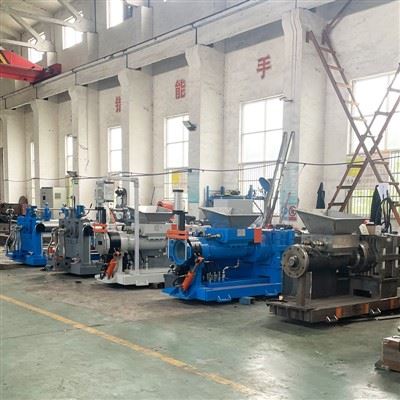
If you're looking for other types of rubber machinery, we also offer some great products. For instance, check out our Silicon Rubber Strainer Extruder Machine. It's designed to strain and extrude silicon rubber effectively. We also have the Continuous Screw Rubber Mixing Mill Machine that can provide continuous and efficient rubber mixing. And if you need to cut rubber materials precisely, our Numerical Control Rubber Cutting Machine is a great choice.
Wrapping Up and Invitation
Well, there you have it! These are some of the key ways to check the mixing quality of a Horizontal Mixer. By following these steps, you can ensure that your mixer is producing high-quality mixtures every time.
If you're in the market for a new Horizontal Mixer or any of our other rubber machinery products, don't hesitate to get in touch. We're here to answer all your questions and help you find the right equipment for your needs. Let's talk about how we can work together to improve your production process!
References
- Smith, J. (2020). Industrial Mixing Handbook. Publisher Name.
- Johnson, A. (2019). Quality Control in Mixing Processes. Journal of Manufacturing Technology.