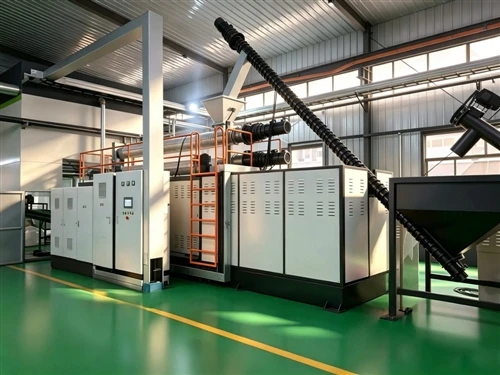
In the realm of waste management and environmental conservation, rubber recycling has emerged as a crucial practice. As a leading rubber recycling equipment provider, I've witnessed firsthand the industry's evolution and the challenges it faces. The question of whether it's possible to upgrade rubber recycling equipment in the future is not just a matter of technological curiosity but a necessity for the sustainable growth of our industry.
Current state of rubber recycling equipment
The current rubber recycling equipment landscape is a mix of well - established technologies and emerging solutions. Traditional machines like the Single Shaft Tire Crushing Machine and the Two - shaft Tire Crushing Machine have been the workhorses of the industry for years. These machines are designed to break down used tires into smaller pieces, which can then be further processed.
The Steel Wire Separator is another essential piece of equipment. It plays a vital role in separating the steel wires embedded in tires from the rubber, allowing for the recovery of both materials. The Rubber Pulverizer Machine is used to grind the rubber pieces into fine powder, which can be used in various applications such as rubberized asphalt, molded rubber products, and more.


However, these existing technologies have limitations. For instance, the energy consumption of many of these machines is relatively high. Crushing and grinding rubber requires a significant amount of power, which not only increases the operational cost for recycling facilities but also has a negative environmental impact. Additionally, the efficiency of some of these machines in terms of material recovery and product quality can be improved. There is often a trade - off between the speed of processing and the quality of the recycled rubber.
Technological advancements driving potential upgrades
The future of rubber recycling equipment looks promising, thanks to several technological advancements. One of the most significant areas of development is in materials science. New materials are being developed that can be used to construct the components of recycling equipment. For example, the use of advanced alloys and composite materials can make the crushing and grinding parts of the machines more durable and wear - resistant. This means less frequent replacement of parts, reduced downtime, and lower maintenance costs.
Automation and artificial intelligence (AI) are also set to revolutionize the rubber recycling industry. Automated sorting systems can be integrated into the recycling process to separate different types of rubber more accurately. AI algorithms can optimize the operation of the machines in real - time, adjusting parameters such as speed, pressure, and temperature to achieve the best possible results. This not only improves the efficiency of the recycling process but also enhances the quality of the recycled products.
Another area of innovation is in the development of new chemical processes. The Devulcanizer is an important part of the rubber recycling process, as it breaks the cross - links in the vulcanized rubber. New devulcanization techniques are being explored that are more environmentally friendly and energy - efficient. These new processes could potentially recover more of the original properties of the rubber, making it suitable for a wider range of applications.
Environmental and economic benefits of upgrading
Upgrading rubber recycling equipment offers numerous environmental and economic benefits. From an environmental perspective, more efficient equipment means less energy consumption and a reduced carbon footprint. By recovering more rubber and other materials from waste tires, we can reduce the amount of waste going to landfills and incinerators. This helps in conserving natural resources and protecting the environment.
Economically, upgraded equipment can lead to cost savings for recycling facilities. Lower energy consumption and reduced maintenance requirements translate into lower operational costs. Moreover, higher - quality recycled rubber can command a better price in the market, increasing the revenue for recycling companies. This makes rubber recycling a more attractive and sustainable business model.
Challenges in upgrading rubber recycling equipment
Despite the potential for upgrades, there are several challenges that need to be addressed. One of the main challenges is the high cost of research and development. Developing new technologies and upgrading existing equipment requires significant investment in terms of time, money, and human resources. Small and medium - sized recycling companies may find it difficult to afford these costs.
Another challenge is the regulatory environment. Different regions have different regulations regarding rubber recycling and the use of recycled rubber products. Upgrading equipment may require compliance with new and more stringent regulations, which can be a complex and time - consuming process.
There is also the issue of market acceptance. Some end - users may be hesitant to use products made from recycled rubber, especially if they are not confident in the quality. Convincing the market of the reliability and performance of products made from upgraded recycled rubber is crucial for the success of equipment upgrades.
The role of a rubber recycling equipment supplier
As a rubber recycling equipment supplier, we play a crucial role in facilitating the upgrade of equipment in the industry. We are at the forefront of technological research and development, constantly exploring new ways to improve the performance of our machines. We work closely with recycling companies to understand their needs and challenges and develop customized solutions.
We also provide training and support to our customers, ensuring that they are able to operate and maintain the upgraded equipment effectively. By building long - term partnerships with our customers, we can help them navigate the challenges of upgrading and maximize the benefits of new technologies.
Conclusion
In conclusion, it is not only possible but also essential to upgrade rubber recycling equipment in the future. Technological advancements in materials science, automation, and chemical processes offer exciting opportunities for improving the efficiency, quality, and environmental performance of rubber recycling. While there are challenges such as high R & D costs, regulatory compliance, and market acceptance, the environmental and economic benefits far outweigh these obstacles.
As a rubber recycling equipment supplier, we are committed to driving the industry forward. We invite you to explore the possibilities of upgrading your rubber recycling equipment with us. Whether you are looking to improve the energy efficiency of your operations, increase the quality of your recycled products, or expand your market reach, we have the expertise and solutions to meet your needs. Contact us to start a conversation about upgrading your rubber recycling equipment and take your business to the next level.
References
- Smith, J. (2022). Advances in Rubber Recycling Technology. Journal of Environmental Science and Recycling, 35(2), 89 - 102.
- Johnson, A. (2023). The Role of Automation in Rubber Recycling. International Journal of Waste Management, 42(3), 156 - 167.
- Brown, C. (2021). New Materials for Rubber Recycling Equipment. Materials Science and Engineering Journal, 28(4), 234 - 245.